
2026-09-08 · 8 min read
Inside a 0.4 m Flocked Factice: Fiberglass, Velvet and Colour Matching
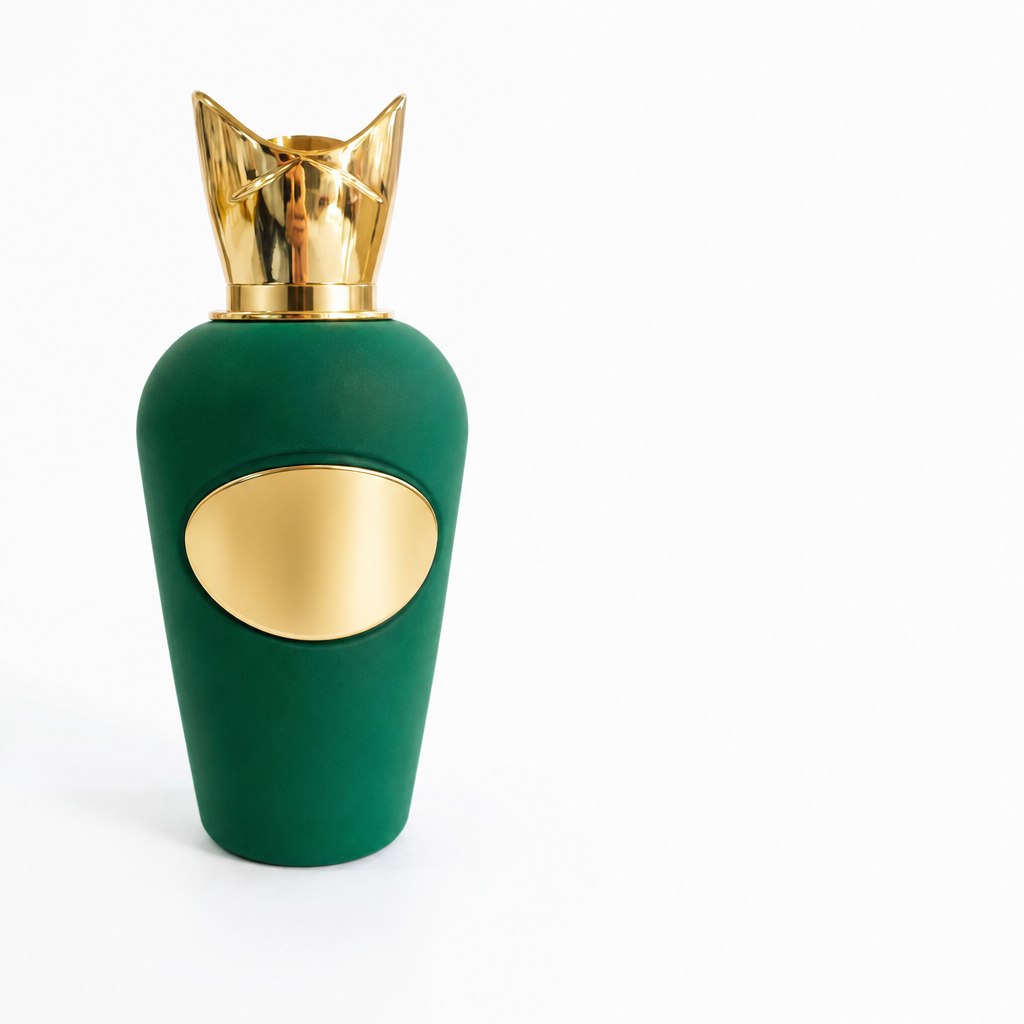
Most questions about our velvet-flocked factices start the same way: “how do you get the surface to look like that?” In a photo, a flocked bottle can pass for lacquer or even for wrapped fabric. Up close it is neither. It is thousands of short fibres standing upright on an adhesive-coated shell, and the whole trick is in how evenly you lay them. This is the story of one green 0.4 m piece finished in our Shanghai workshop — and of the finish that made it worth writing about.
Where a 0.4 m factice earns its place
We wrote earlier about a 1.1 m fiberglass factice that claims a whole window from across a mall floor. A 0.4 m model does a different job. It stands about 40 cm — past the knee, below the counter line — and it is the size that works when the display space is a boutique shelf, a pop-up counter or a photo shoot, not an atrium. It is tall enough to read from across the room, light enough for one person to lift, and it does not swallow the smaller products around it. For most fragrance launches, it is the first size a buyer asks for.
What surprises people is that at this size we still get asked for a solid, opaque, textile finish rather than a glossy one. That choice changes the build more than the height does.
Why this one is fiberglass, not acrylic
If a design needs translucency — the frosted, softly glowing look — acrylic is usually the answer, as in our walkthrough of a 40 cm frosted acrylic factice. This brief was the opposite: the customer wanted a deep, saturated colour with a matte, fabric-like surface. There is nothing to see through, so the shell only has to be smooth, seamless and stable.
We built the body as a one-piece fiberglass form. At this scale that gives us a shell with no visible joints — important, because flocking hides nothing. The surface also has to accept a coating that ordinary painted props do not get, which brings us to the part people actually ask about.
Flocking, step by step
Flocking is a textile-finishing process borrowed by the display trade: short fibres are bonded to a coated surface so they stand upright, creating the nap you feel on velvet. On a factice it is done in four stages, and none of them can be rushed.
1. Preparing the shell. Before any fibre goes near it, the fiberglass body is sanded, pinholes are filled and the surface is sealed. This is the stage that decides the outcome. A scratch that is invisible on a painted bottle shows up as a hard line under flock, so we check the shell under raking light and rework it until it is dead flat. Dust is the second enemy — a single hair or grain under the adhesive becomes a permanent bump.
2. Applying the adhesive. A layer of flock adhesive is applied evenly to the area being finished. Too thin and fibres will not hold; pooled patches take forever to cure and can look glossy where the fibre sinks. Getting an even coat across a curved shoulder takes practice rather than special equipment.
3. Electrostatic application. The fibres — short-pile nylon or viscose, cut to length and dyed to the order colour — are given an electrostatic charge and directed at the wet adhesive. The charge drives each fibre in perpendicular to the surface, so the pile stands upright instead of lying flat. That perpendicular pile is what gives flock its velvet depth and its soft, light-absorbing hand. Laid flat, the same fibres would look like fuzz on paint.
4. Curing, brushing and inspection. The piece cures long enough for the bond to set, then loose fibre is brushed and vacuumed off. It is normal to see a little dust in the box on arrival — that is fibre that never bonded, not the finish coming off. Finally the body is inspected again under raking light for thin patches, which we re-flock locally rather than redoing the whole piece.

Why not just wrap the bottle in real velvet? We tried that route early on and it fails in retail for practical reasons: fabric has seams, it snags, and it collects dust in the fibres. Bonded flock has none of those problems — no seams, nothing to catch, and a surface that brushes clean.
Colour matching: green is harder than it looks
The body colour for this piece was matched to the customer's palette, not chosen from a swatch we happened to stock. Flock behaves differently from paint: the pile scatters light, so the same pigment reads deeper and softer than a painted panel of the same formula. Matching “that exact green” therefore means producing a flocked sample card and checking it against the reference under shop lighting, not eyeballing a screen. We ask for a Pantone or RAL number, a fabric scrap or the original bottle — anything physical — and we confirm the colour on an actual flocked sample before the run.
The cap and the plaque: the parts we leave blank
The gold crown cap is a separate component, cast and plated on its own so the metal detail is controlled independently of the flocked body. The gold plaque on the body is the piece's signature, and this is where our default policy helps both sides: the plaque ships blank, and the customer's mark is applied on site — by their team, or by us under a signed reproduction licence.
If you send us a bottle that carries a brand mark you do not own, we will say so at the quoting stage rather than quietly copying it. Replicas of bottles are our business; copying someone else's trademark is not. Blank by default is also simply better for photography — the prop belongs to the shoot, not to a logo.
What the finish will — and will not — do
A flocked factice is built for indoor retail: counters, windows, exhibitions, launches and shoots. Keep it out of rain and direct sun, where adhesive and fibres both age badly, and do not expect it to shrug off being used as a shelf. For cleaning, a soft dry brush or a lint-free cloth is all it needs; we would not use solvent wipes or alcohol on it. If a piece takes a knock in transit, the repair is usually local — re-flock a patch, blend the pile — rather than a whole rebuild, which is worth knowing before you ship one across an ocean.
Specs at a glance
| Height | 0.4 m shown; built to your size |
|---|---|
| Body | Fiberglass, one-piece form, velvet-flocked finish |
| Finish colour | Matched to your reference (green shown; any flock colour) |
| Cap | Sculpted, polished gold-plated resin, made as a separate component |
| Plaque | Blank by default; finished with your mark under authorisation |
| Minimum order | from 1 piece |
| Production lead | Usually around 20 days for the first pieces, depending on design |
Common questions
Can the same body be flocked in another colour?
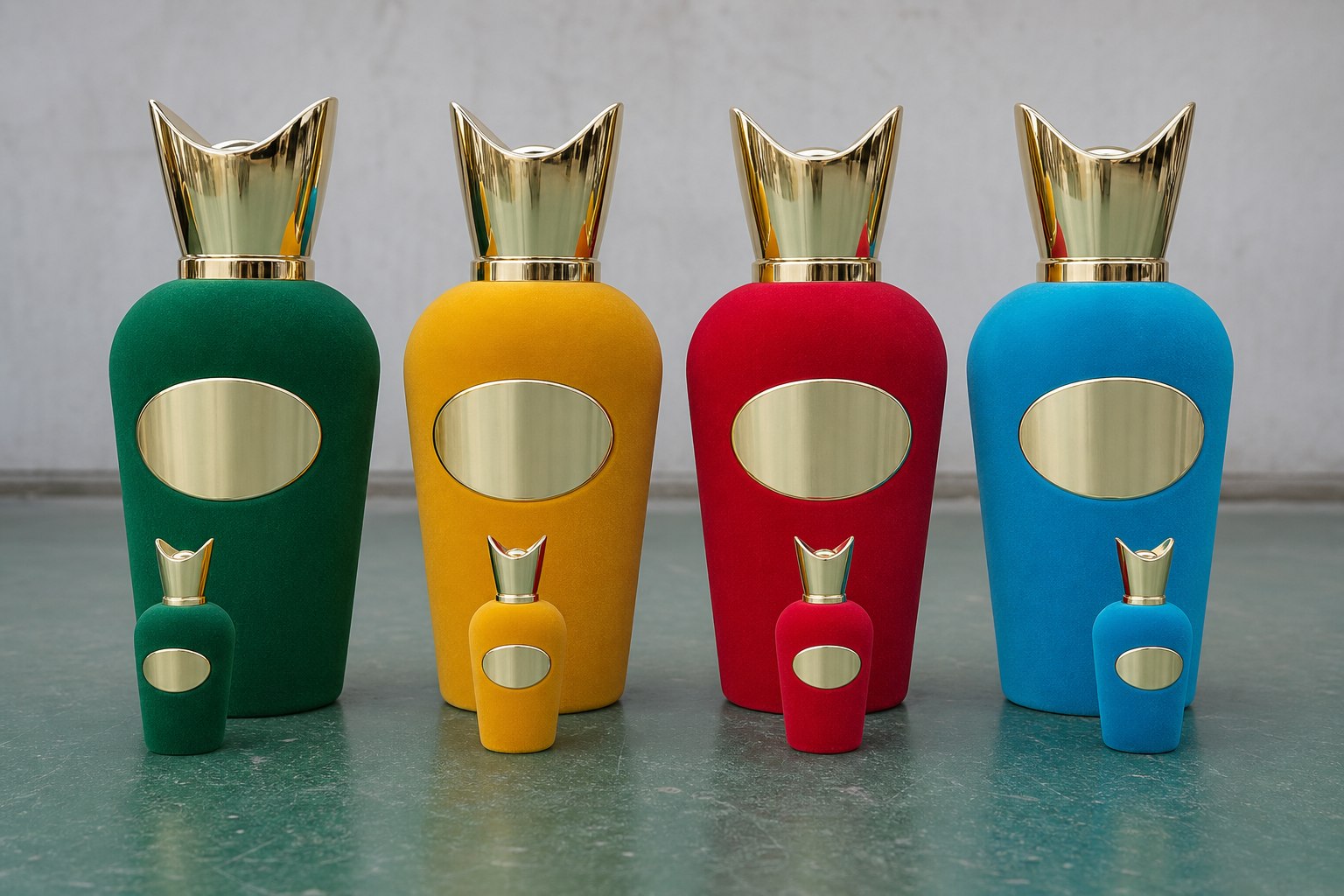
Yes. We produce flock to order in matched colours, and a run of the same body in several colours is common — the four-colour line in the photo above is one example. Send the reference and we will confirm it on a flocked sample card before production.
Is the velvet surface suitable for outdoor use?
No. Flock is an indoor display finish. For exterior or semi-outdoor placements we would recommend a different surface and would tell you so at the quoting stage.
Will the fibres shed over time?
Loose fibre in the shipping box is normal — it is the surplus that never bonded, and it is brushed off after curing. The bonded pile itself does not shed, fray or pill the way fabric would, which is why flock survives months of retail handling.
How does this compare with a gloss-lacquered factice?
Gloss throws reflections and hotspots under retail spotlights, which makes the piece harder to light and photograph. Flock absorbs the light instead, so the silhouette stays readable from any angle. If your window is lit from above with tight spots, matte often photographs better — worth deciding before we start finishing.
A 0.4 m factice is the workhorse size of retail display, and a flocked surface turns it from a bottle-shaped prop into something people want to touch. If you have a design that deserves that treatment, send us your bottle or drawing and we will come back with feasibility, a flocked colour sample and a quote. New to the category? Start with what a factice bottle is, or see the full range of factice perfume bottle models we build.