
2026-09-07 · 7 min read
1:1 Injection Pen Display Models: What Pharmacies Actually Order
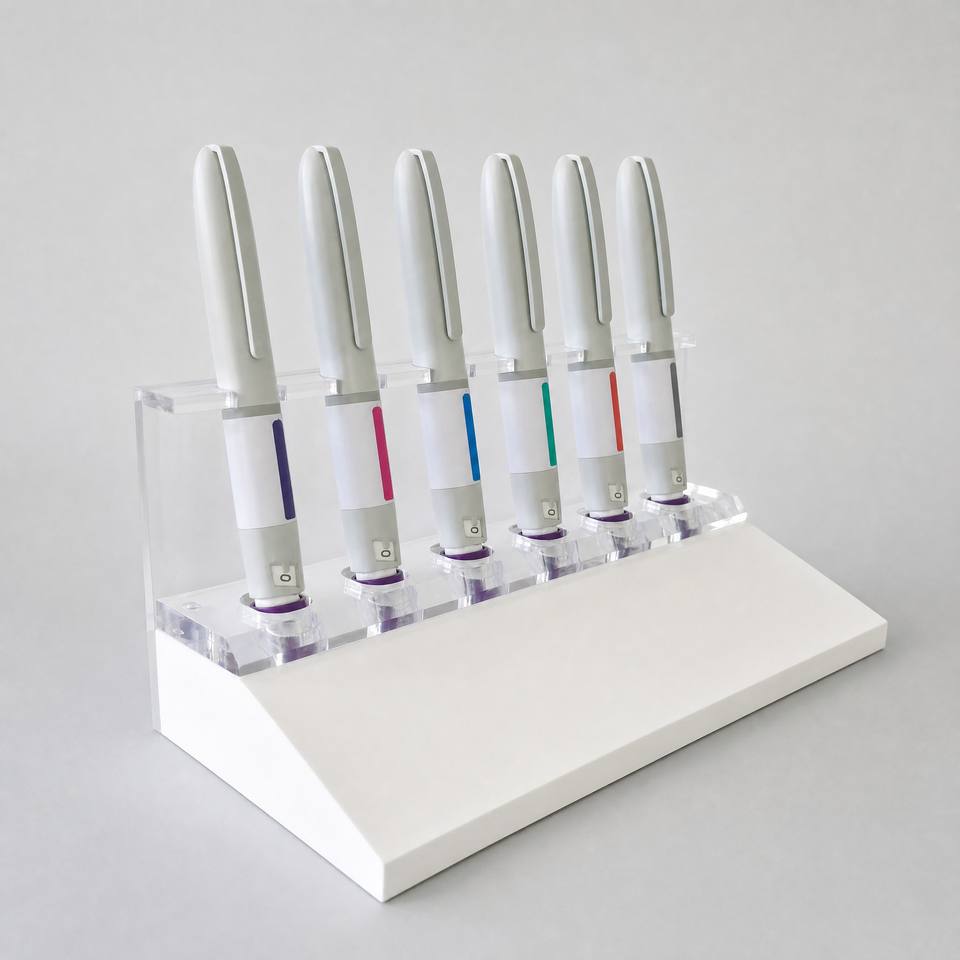
Walk into most pharmacies and you will see one of these near the till: a pen, standing on its own small display, that customers can look at and handle before they buy. It is almost never the real device. It is a 1:1 display model — the same shape, the same colour bands, the same dosing window — with nothing inside. We have built dummy pens for pharmacy and pharma clients since 2010, and this set, finished recently in our Shanghai workshop, is a fair picture of what the job actually involves.
Why a counter needs a fake pen
The reasons are usually practical rather than decorative. A real injection pen costs money, needs to stay with the pharmacist, and in many markets sits behind dispensing rules that do not allow it to be handed around the shop. But customers still want to see the thing before they commit — its size, how it feels in the hand, how the dose dial turns. A dummy solves that without touching the stock.
The same logic applies at trade shows and pharma launches, where the real product may not exist yet in finished form, or where the sample unit cannot leave the meeting room. What the visitor remembers is the object on the stand, not the brochure. That is the job the model does.
What is actually in the set
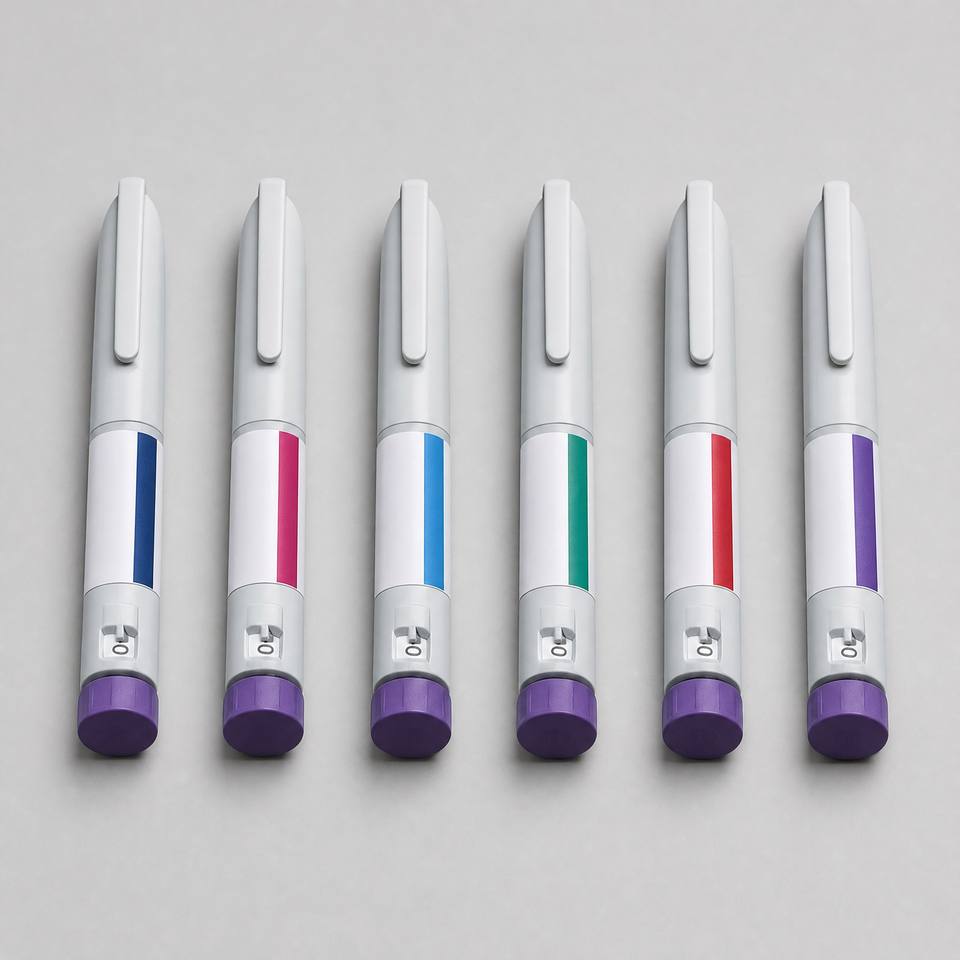
This set holds six pens, because the client's range comes in six variants. That is the part people underestimate: a good display replica is not one copy of the product, it is the whole range reproduced consistently, so the colour coding that separates one variant from another reads exactly as it does on the real thing.
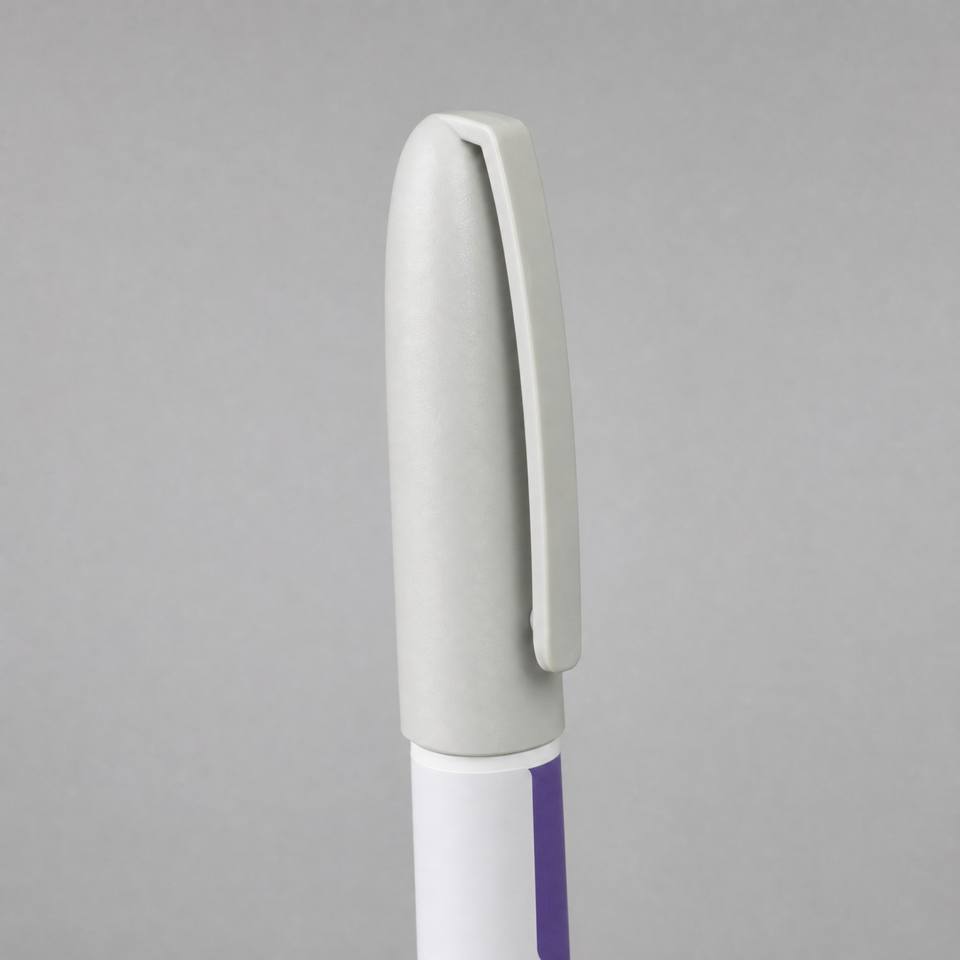
On the model, that means the body shape, the position of the clip, the recessed label area and the small dosing window at the lower end are all reproduced. Even the little notch that the dial sits in is carried over — detail work that only matters when a customer picks the pen up and looks at it from two centimetres away.
Resin, and why it suits a small prop
For giant perfume factices we usually work in fibreglass — at two metres, strength and weight decide everything, as we wrote in our piece on a1.1 m velvet-flocked factice. A pen is the opposite problem. It sits at eye level, it gets picked up, and the details are small, so the material has to hold a fine mould impression and feel dense in the hand.
Resin does that well. The casting keeps crisp edges on the clip and the dial texture, and after demoulding each piece is hand-finished — trimmed, sanded, and given a matte surface so it does not glare under shop lighting the way raw plastic does. The colour bands are painted on in the correct sequence; they are not printed stickers, so there is no edge to lift over time.
The stand does half the work
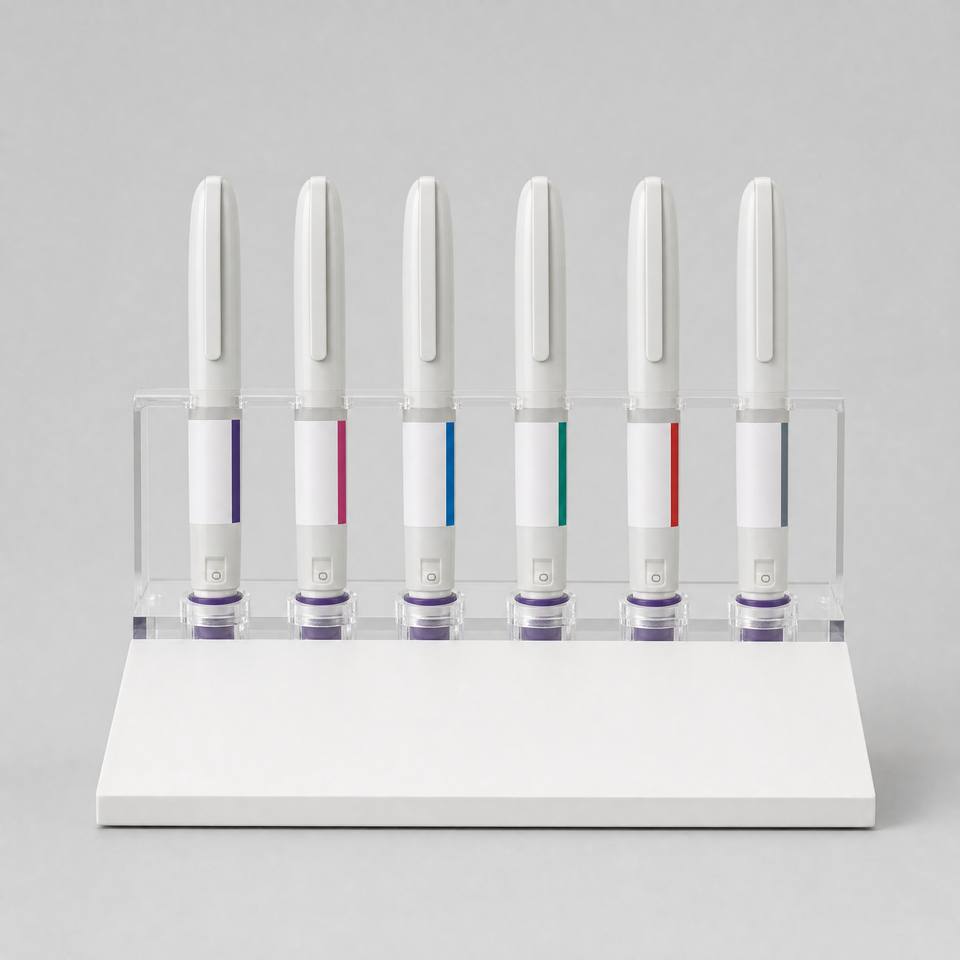
A pen lying loose on a counter looks like a lost pen. Put the same six pens in a low wedge base with a clear acrylic holder and the counter reads as a brand display in seconds. The wedge sets the viewing angle — slightly tilted back toward the customer, not standing vertical like a toothbrush. The acrylic bar holds each pen at the top while the base keeps the bottom in place, so nothing rattles when the drawer under the counter slams.
About the labels — read this part
The pens in the photos carry no brand name, and that is deliberate. Unless you supply the rights to reproduce a specific product, we ship with blank label panels, finished to match the real thing. Most of our pharmacy clients do one of two things: they apply their own printed labels locally, or they keep the models generic because a display dummy is not allowed to carry the actual trade mark without authorisation. Say the word at the quoting stage and we will tell you honestly which route fits your situation.
One point we repeat to every new client: this is a display prop. It has no mechanism, no cartridge, nothing that could be mistaken for a functioning device. When the counter staff pick it up, that should be obvious from the weight and the feel — we build it that way on purpose.
What we need from you
A quote for a set like this is usually possible from four things: a real pen to measure (we return it), or drawings or a 3D file; the number of variants and their colour bands; the label plan; and the quantity. From those we come back with the per-set price and a lead time — 25 days covers the first one to five sets on a fresh design.
Specs at a glance
| Scale | 1:1, true to the original sample or drawing |
|---|---|
| Material | Resin, hand-finished matte surface |
| Set contents | 6 pens + white wedge base + clear acrylic holder (customisable) |
| Colours | Band colours matched to your range |
| Labels | Blank by default; custom printing under authorisation |
| Minimum order | from 1 piece |
| Production lead | 25 days for the first 1–5 sets |
Common questions
Can you make a single pen without the base?
Yes. The six-pen counter set is the most common format, but we also make single models for desk displays and training use. The per-piece price is higher; the base and holder are where the tooling cost concentrates.
How close does the colour need to match?
Send a real pen or a colour reference and we match the bands against it before we paint the production run. If you need a specific Pantone reference, give us the numbers at the start.
Do you also build the giant versions?
That is most of our work. The same workshop produces oversized cosmetic replicas anddisplay props for retail and exhibitions — it is common for a client to order a counter set like this and a large-format piece for the same launch.
A display set like this one looks simple, and that is the point of it. If you are planning a pharmacy or pharma counter display and want a quote,send us a sample or drawing — or start with thedisplay props overview to see the rest of what we build.